As opportunities for study and academic exchange between Kosovo and the EU continue to grow, EU programmes such as Erasmus+ are becoming increasingly important for young people seeking new experiences, knowledge and connections across Europe.
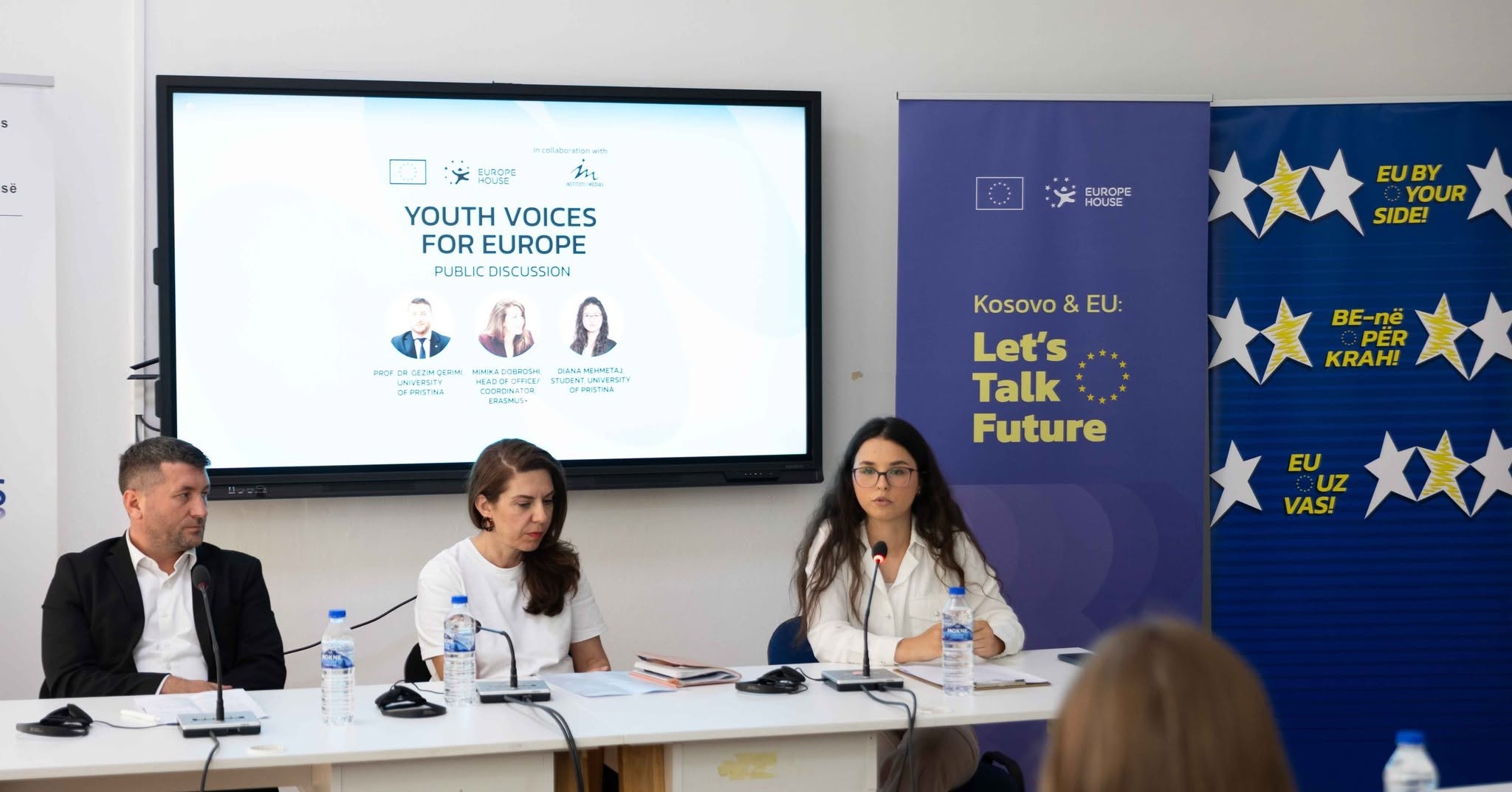
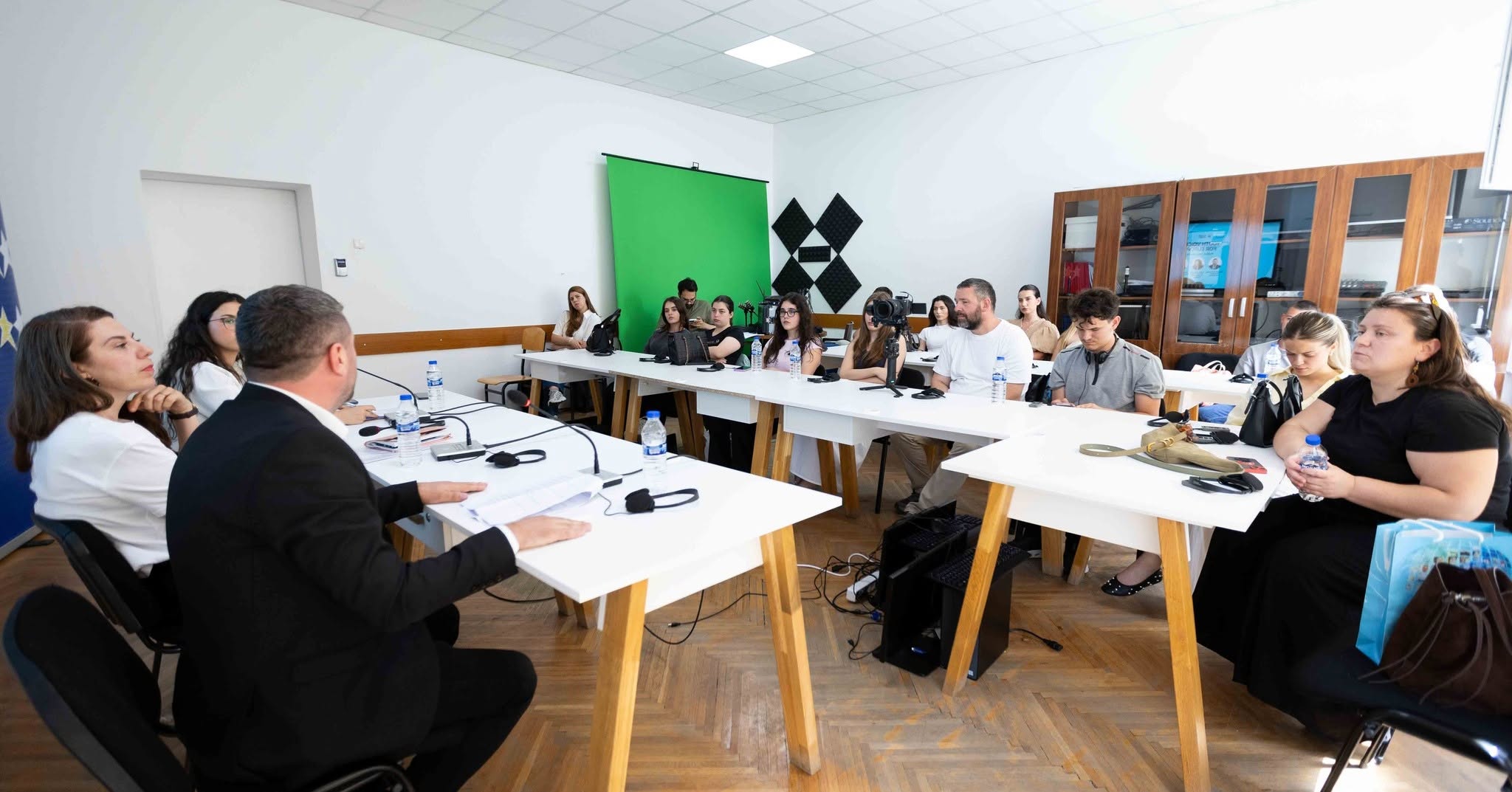
These opportunities, alongside other aspects such as degree recognition, freedom of movement, digital rights and youth’s perspectives on European integration, were discussed at a public panel held on Monday at the Faculty of Philology, organised by the EU in Kosovo in cooperation with the Media Institute at the University of Pristina.
Dubbed “Youth Voices for Europe”, the panel discussion featured Prof. Dr. Gëzim Qerimi of the University of Pristina, Mimika Dobroshi, Head of Office and Erasmus+ Coordinator, and Diana Mehmetaj, a student at the University of Pristina.
Participants discussed how young people in Kosovo can benefit from closer ties with the European Union, particularly through education, mobility and wider access to opportunities.
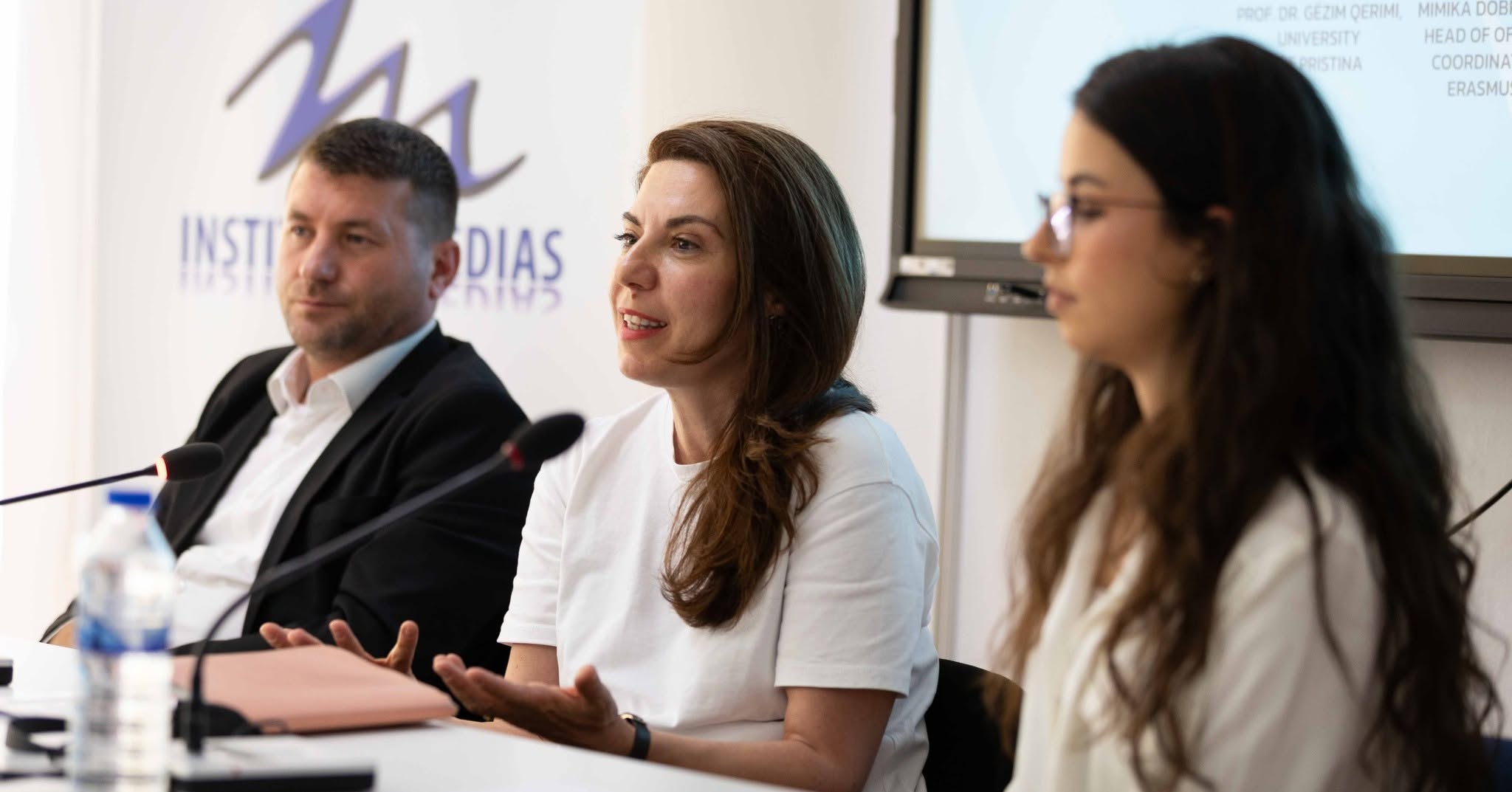
As part of the discussion, Mimika Dobroshi spoke about the role of Erasmus+ in connecting young people and academic institutions in Kosovo with those across the European Union.
“The Erasmus+ programme perhaps best brings the idea of European integration to life by building bridges between the youth, students and academics of Kosovo and those of the European Union. So far, more than 12,000 students and staff have spent time at higher education institutions in the European Union. From 2021 to 2025, €8.2 million have come to Kosovo through various European Union Erasmus plus projects, benefiting different institutions,” Dobroshi said.
From the student perspective, Diana Mehmetaj said the topic is especially important because it directly affects the lives and future opportunities of young people in Kosovo.
“How much Kosovo’s youth stand to benefit from Kosovo’s integration into the European Union is a very important issue, considering that young people are already focused on going abroad, studying outside the country or creating jobs, given the conditions offered by European Union countries. Usually, when we think about it, it seems more like a political issue, but for us young people it is something that directly affects our lives,” Mehmetaj said.
Prof. Dr. Gëzim Qerimi also stressed that young people in Kosovo want equal opportunities with their peers across European Union.
“Kosovo’s youth want to compete on an equal and fair basis with all their peers in Berlin, Paris, London, Rome, Amsterdam and everywhere else,” Qerimi said.
The discussion also highlighted the partnership between the EU in Kosovo and the University of Pristina, which is expected to continue through upcoming activities, including the Summer University, with a focus on youth support and education.
As Kosovo’s strongest partner and largest donor, with more than €3.7 billion invested since 1999, the European Union continues to support young people and education through learning, exchange and development opportunities.