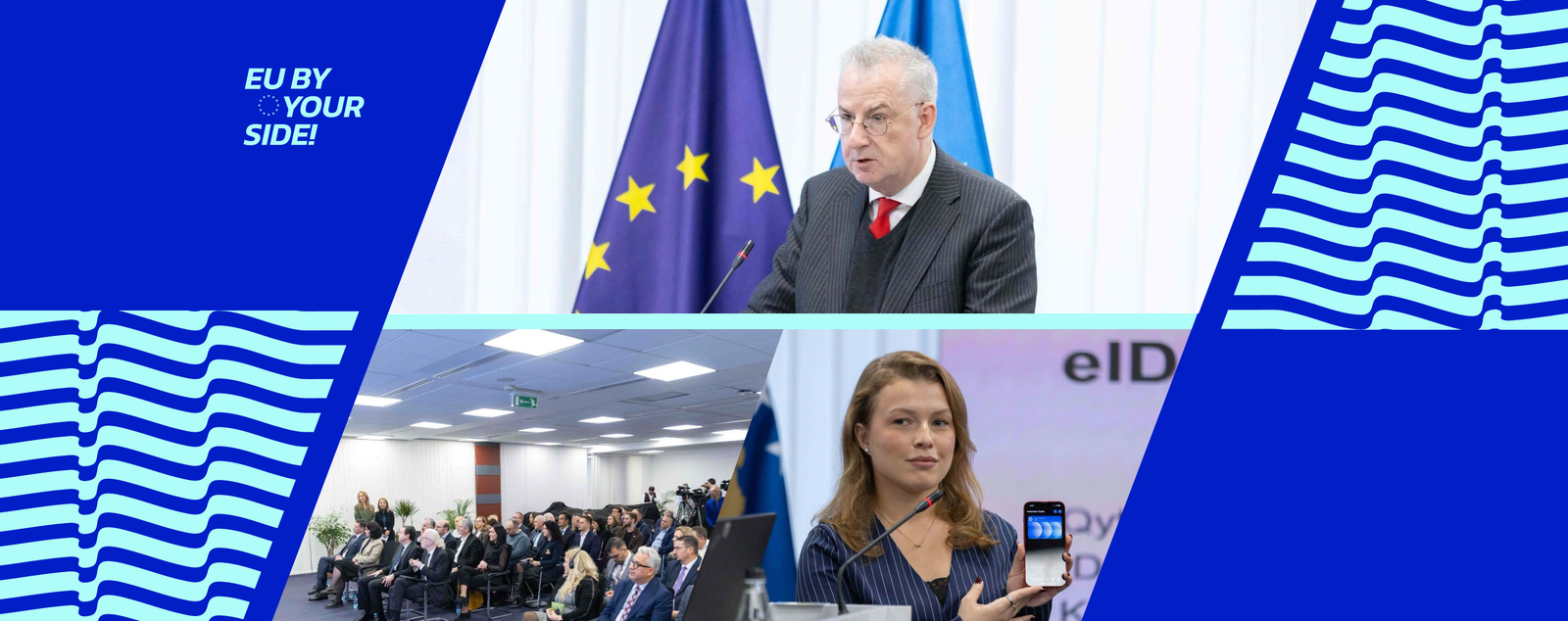
A document arrives by email, but instead of printing it, signing it by hand and scanning it to send it back, Kosovo citizens can now sign it electronically and return it in seconds.
Kosovo's new digital identity services were developed with €3.2 million in EU’s investment.
Working with Kosovo's institutions, the EU has helped bring electronic identification (eID system) and electronic signatures (eSign) into use, giving citizens and businesses a secure way to verify their identities online and access a growing range of digital services.
Signing documents made simpler
When someone signs a document through the eSign application, a digital certificate linked to their verified identity allows the recipient to check who signed it and whether the document has been changed afterwards. The service provides qualified electronic signatures, which have the same legal effect as handwritten signatures under Kosovo law.
Citizens can obtain their eID free of charge at one of the seven regional centres of the Civil Registration Agency, where their identity is verified. They can then store their electronic identity in the Kosovo Digital Wallet on their phone and use eSign to sign PDFs and other supported electronic documents from a phone or computer.
For Arbër, a Kosovo entrepreneur, the new service has already made his day-to-day business easier.
“The registration process took about 15 minutes. When you run a business, there's always a document that needs signing. Being able to do it from my phone and just send it, without printing or scanning anything, makes my day easier,” he says.
People registering a business can already use electronic signatures as part of their application. Electronic seals are also planned for a later stage, allowing companies and organisations to confirm that documents have come from them.
Kosovo's digital future and European integration
Trust is essential to the uptake of digital services. Protecting personal information and ensuring secure digital identities are central to the European standards that have guided the development of Kosovo's new services. The work also contributes to the implementation of Kosovo's Reform Agenda under the EU Growth Plan.
Ultimately, the success of Kosovo's digital transformation will depend on how widely these services are used. As EU Ambassador Dirk Schuebel put it:
“Technology alone does not change lives; putting it to good use does.”
As more institutions, citizens and businesses embrace these services, the EU's investment will help reduce paperwork, save time and make public and business services more accessible, while advancing Kosovo's digital integration with the European Union.