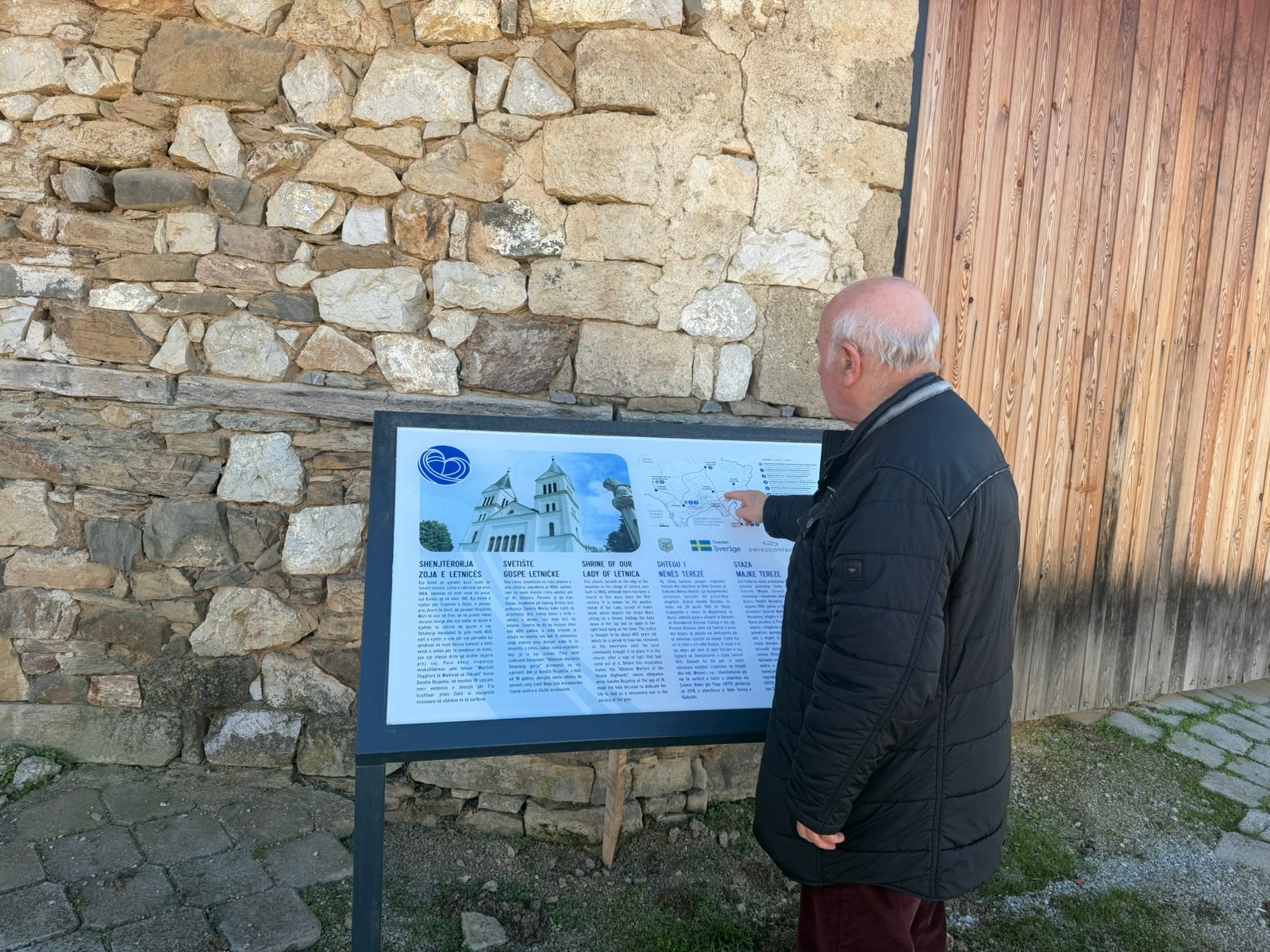
Every August, thousands of pilgrims travel to the quiet village of Letnicë/Letnica in Kosovo's south-east to pray at the Church of the Assumption of the Blessed Virgin Mary. They are continuing a tradition that has endured for centuries—one that once brought a 17-year-old Gonxhe Bojaxhiu from Skopje – capital of North Macedonia - to the village before the world came to know her as Mother Teresa.
Today, visitors can once again make that same journey. Restored with support from the European Union through its Cross-Border Cooperation Programme between Kosovo and North Macedonia, the historic pilgrimage route has reopened after decades of neglect, inviting pilgrims, hikers and travellers to rediscover a shared heritage while creating new opportunities for the communities along the way.
More Than a Pilgrimage
Long before modern borders were established, Letnicë/Letnica was already bringing people together.
Each summer, Catholic pilgrims gathered for the Feast of the Assumption alongside Kosovo pilgrims of different ethnic backgrounds. Some came to give thanks, others to pray for health, children or prosperity. Different languages, traditions and customs come together in the same place.
Over generations, these annual pilgrimages became woven into the region's shared cultural identity connecting communities for centuries.
Where Mother Teresa Found Her Calling
For Mother Teresa, Letnicë/Letnica was far more than a pilgrimage destination.
On 14 August 1928, during a visit to the sanctuary, the young Gonxhe Bojaxhiu made the decision to dedicate her life to God and to serving others—a deeply personal moment that shaped the life of one of the world's most admired humanitarians.
For Don Lush Gjergji, the Kosovo Albanian Catholic priest and leading scholar of Mother Teresa's life, the village is central to understanding her vocation.
According to Don Lush Gjergji, she made the pilgrimage to Letnicë/Letnica for six consecutive years. "These were not simply journeys," he says. "They shaped her spiritually."
Walking the Same Path
Once overgrown and difficult to follow, the EU-supported route called Paths of Mother Teresa has been restored and clearly marked, allowing pilgrims, hikers and visitors to retrace the journey that shaped Mother Teresa's spiritual journey.
Beyond restoring a historic trail, the EU’s investment has helped position the Mother Teresa route as part of a wider cultural tourism experience linking Kosovo and North Macedonia, encouraging visitors to discover both sides of the border through their shared history.
By doing so, the European Union is helping preserve history, promote sustainable tourism, and strengthen ties between neighbouring communities.
A Heritage That Sustains Communities
The renewed route is already bringing new life to Letnicë/Letnica.
Although home to fewer than 5,000 residents, the village welcomes more than 30,000 visitors during the summer pilgrimage season. Their visits support local guesthouses, restaurants, cafés and family-run businesses, demonstrating how cultural heritage can drive sustainable local development.
The sanctuary's international profile is also growing. During the August 2025 pilgrimage alone, around 300 visitors from Latin America travelled to Letnicë/Letnica to visit the place so closely associated with Mother Teresa's spiritual calling—a reminder that a small village can hold global significance.
Building Bridges That Last
The revival of the pilgrimage route is about more than restoring a historic path. It is reconnecting communities through a shared story, encouraging visitors to discover both sides of the Kosovo–North Macedonia border and demonstrating how cultural heritage can strengthen regional cooperation and create opportunities for future generations.
As Kosovo's strongest and most reliable partner, and the largest provider of financial assistance, the European Union supports projects that improve people's lives while helping Kosovo advance on its European integration path. Through its Cross-Border Cooperation Programme, the EU is investing in initiatives that preserve shared heritage and create lasting opportunities for local communities.
Those arriving in Letnicë/Letnica today discover far more than a centuries-old sanctuary. They find a village where faith, history and culture have brought people together for generations and where that shared journey continues.