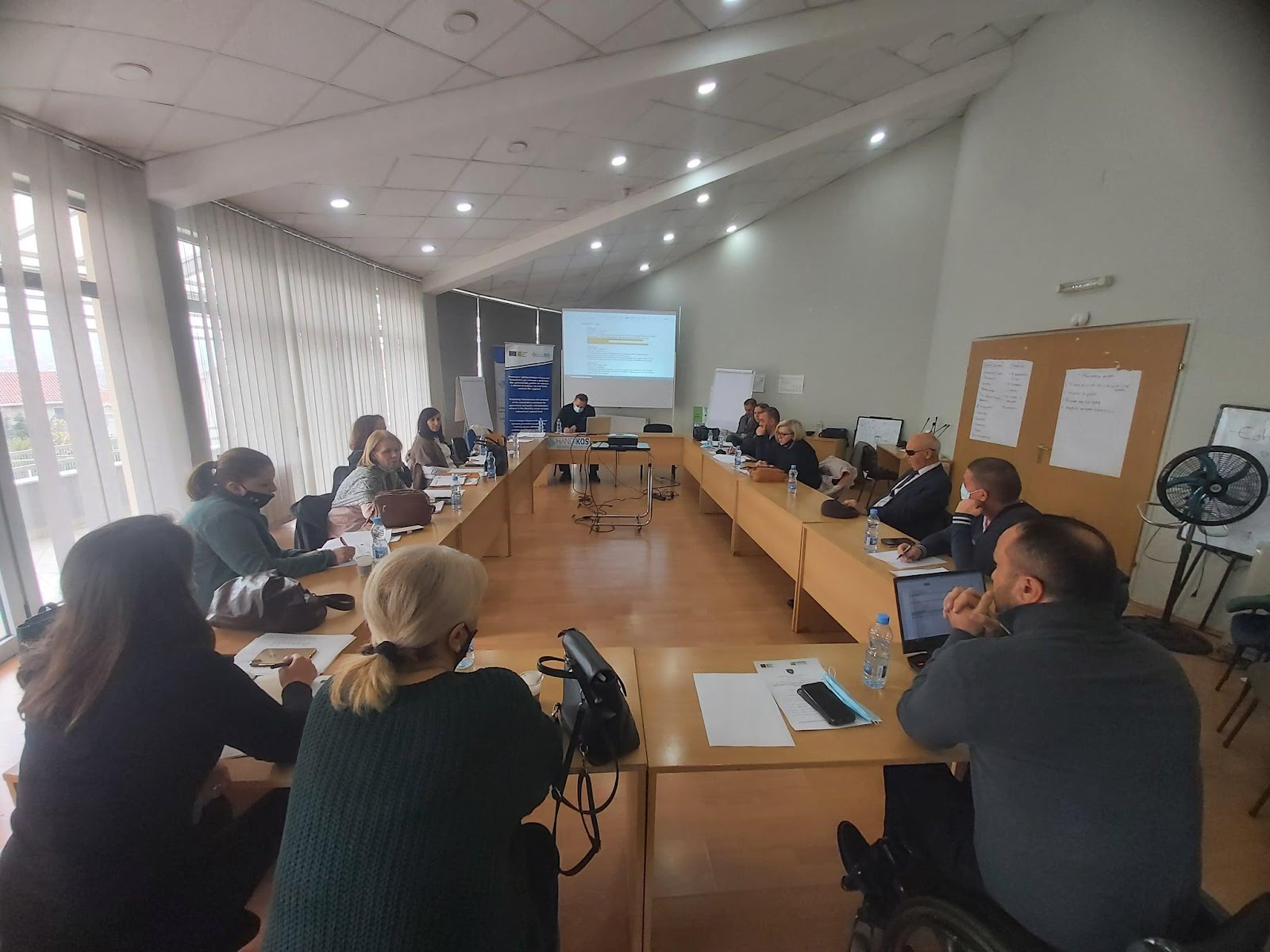
While the role of HANDIKOS and other Kosovo project partners as strong actors in the Kosovo civil society was to strengthen capacities of the disability sector, advocating for mainstreaming disability and promoting the rights of persons with disabilities, the role of the Finnish Partners was to provide technical advice, expertise and peer support to the Kosovo organizations for persons with disabilities in organizational democracy, advocacy work and accessibility.
The project aimed to have an impact on the disability issues in Kosovo with the main goal of promoting and cultivating an inclusive society. In order to achieve this result, among other things, it was important to ensure the availability of data on disability issues, which would be useful for public institutions and Organizations of Persons with Disabilities (OPDs) to utilize for planning, monitoring and the inclusion of disability-specific initiatives.
Through the five years of implementation, the project worked on three main areas: mapping the situation of the persons with disabilities in Kosovo; advocacy activities with relevant public stakeholders, and peer-to-peer activities working directly with persons with disabilities.
Research Report “
Where does Kosovo stand?”
Drawing from the lack of reliable and updated data on the current legislation that promotes and protects the rights of persons with disabilities in Kosovo, the project’s first action was to implement a research study looking at where Kosovo stands in relation to the international standards on disability issues, the Convention of the Rights of Persons with Disabilities and the acquis communautaire of the European Union, in the respective fields.
The research study looked into the international disability standards codified in relevant conventions and legal acts through the following categories: 1. Right to life and Justice, 2. Independence, privacy, family and life in community, 3. Accessibility, 4. Education, 5. Freedom, protection from torture, integrity and mobility, 6. Equality, non-discrimination (women and children), 7. Health, 8. Employment and social care, 9. Public participation, 10. Statistics and international cooperation.
The findings of the research showed that less than one third (30.72%) of the assessed international disability obligations (standards) are fully translated into Kosovo’s legislation. The remaining of the obligations were partially addressed (50.00%) and missing standard (19.28%) assessment categories. Accessibility remains the most challenging category, with only 6.77% of the standards fully included in the legislation. Public participation, statistics and international cooperation were found missing a standard of level 60% to 100%. It should be duly noted that overall, most of the obligations (standards) are assessed as “Partially addressed” (50%). This means that half of the assessed standards, although they are part of the Kosovo legislation, fail to fully translate the respective standards, thus preventing people with disabilities from fully enjoying and exercising the respective rights.
With the goal to advocate for urgent intervention, published under the title “Where does Kosovo stand?” research findings were presented to the Kosovo Government and other relevant stakeholders in the annual Conference organized on 3 December 2019. The findings of the research were used throughout the project implementation to advocate for better conditions for persons with disabilities in Kosovo.