Throughout July, the EU in Kosovo engaged in EU-funded public events on education, youth, labour rights, and media freedom, while continuing to support institutions in their engagements towards the European path.
Investing in Kosovo’s Youth, Education and European Opportunities
Education and youth empowerment remained at the heart of the European Union in Kosovo’s support for Kosovo and its public engagements in July. The EU in Kosovo continued to create opportunities for young people in Kosovo to gain knowledge, skills and international experience.
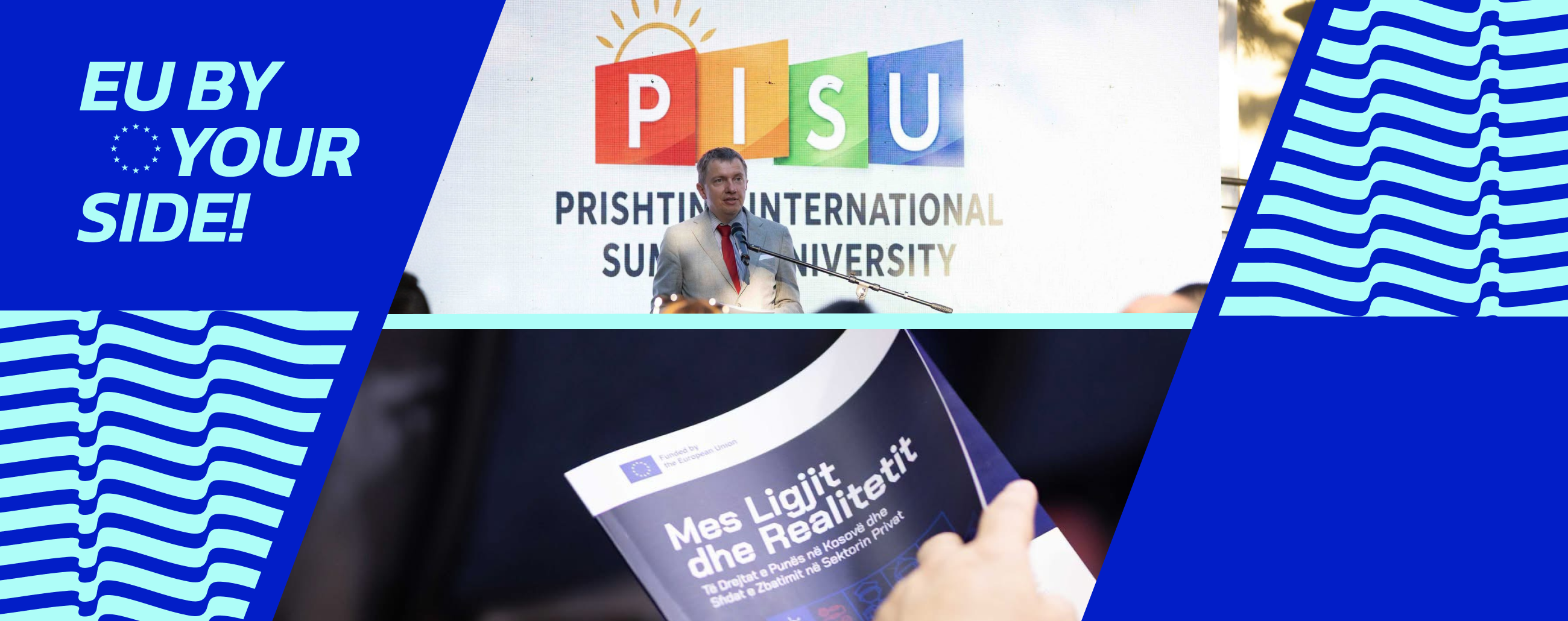
The EU in Kosovo partnered with the University of Pristina through Europe House Kosovo for the 26th edition of the Prishtina International Summer University, bringing together students, academics and partners from Kosovo, the region and beyond.
Speaking at the opening of the Pristina International Summer University, Acting Head of the EU in Kosovo Boguslaw Gertruda reaffirmed that investing in young people, education and human capital development is essential for Kosovo’s future.
Beyond academic exchanges, the EU in Kosovo also supported conversations on inclusion, equal access to education and is helping young people in Kosovo gain the knowledge, experience and networks needed to contribute to the country’s European future.
Supporting Better Conditions for Workers and Media Freedom
The EU in Kosovo’s engagement on strengthening labour rights, improving working conditions and supporting a safer environment for journalists and media professionals in Kosovo, continued with two report publications in July.
With EU’s support, the Advocacy Training and Resource Center (ATRC), BIRN Kosovo and the Jahjaga Foundation published the report “Between Law and Reality: Labour Rights in Kosovo and the Challenges of Implementation in the Private Sector.” The report highlights the gap between legal protections and the everyday realities experienced by many workers.
The findings point to key challenges, including informality, wage inequalities, unsafe working conditions and discrimination, while providing recommendations for policy reforms and stronger institutional mechanisms.
“The EU encourages stronger focus on workplace health and safety, advancing women’s labour market participation, employment equity and anti-discrimination. Stronger regulations and a better-resourced Labour Inspectorate would represent important steps forward,” said Acting Head of the EU in Kosovo Boguslaw Gertruda.
Meanwhile, at the launch of the report by the fact-finding mission of the Council of Europe Platform to Promote the Protection of Journalism and Safety of Journalists, EU representatives called for greater protection of journalists, responsible public communication, transparent media ownership and inclusive consultation on reforms affecting the media sector.