By Mila Mihajlović, Young European Ambassador from Lipjan/Lipljan
Beyond the political and economic definitions of the European Union exists a prism shaped entirely by youth who are not yet part of the EU, but who already belong to it. This reality has been forged by complex and deeply traumatic historical events, ones that reshaped not only the societies of the Western Balkans, but the way young generations understand their own social roles and responsibilities - pushing them to become community trailblazers rather than passive recipients of care or mere consumers of political news.
The European Union continues to support the WB6 youth through various programmes and projects such as Erasmus+, the Young Cell Scheme, and many others. These have given young leaders across the Western Balkans direct opportunities to contribute to social and structural change, whether through activities run by EU-funded and EU-partnered organisations, or through their own initiatives, made possible by that same funding. These prospects have marked the beginning of an era in which civic engagement is seen not as optional, but as a necessity for building a sustainable and just future. And, in turn, this has fueled a new generational wave, one woven through with social, geopolitical, and cultural awareness - turning WB6 youth into genuine changemakers with enormous potential and skill.
Nowhere is this wave more visible than in Kosovo, home to the highest share of the youth population in the region. Here, opportunities have been closely tied to programs on transitional justice, human rights, and multiethnic tolerance, laying the groundwork for informal reconciliation among youth from different communities.
Young Voices Shaping Europe’s Future
Being raised in Kosovo and becoming an activist at a very young age, my central goal has been to show how essential it is to build one’s social participation around contributions to humanitarian causes. Therefore, the front line of my work has been the fight for human rights, gender equality, and, above all, peace. Where formal politics couldn’t reach, we, as young people, dug deeper: rebuilding bridges long since destroyed, seeking justice, and reopening wounds that may never fully heal, in order to understand how we can build a shared future in which the past does not repeat itself.
Becoming a Young European Ambassador (YEA) provided me with an official platform to continue my advocacy and a direct insight into how powerful EU institutions can be in supporting youth causes and collective needs. From Brussels to Pristina, the goal is simple: build platforms where young people and experts can engage, exchange ideas, and form networks grounded in leadership, talent, and intellect.
From Opportunity to Civic Action
The YEA network operates on a simple principle: connecting youth to opportunities curated around their interests and academic background. This precision makes engagement feel personally relevant to each activist’s profile, and that relevance is what genuinely inspires members toward deeper mobilisation and long-term commitment.
At the same time, this role has reshaped how I reflect upon meaningful engagement. Regardless of the opportunities provided directly by the network, Young European Ambassadors continue to be active and pursue partnerships to sustain their advocacy. Many use their personal capacities to introduce innovative approaches to issues youth face daily; further proving their dedication and ability in shaping the present guided by justice and equality.
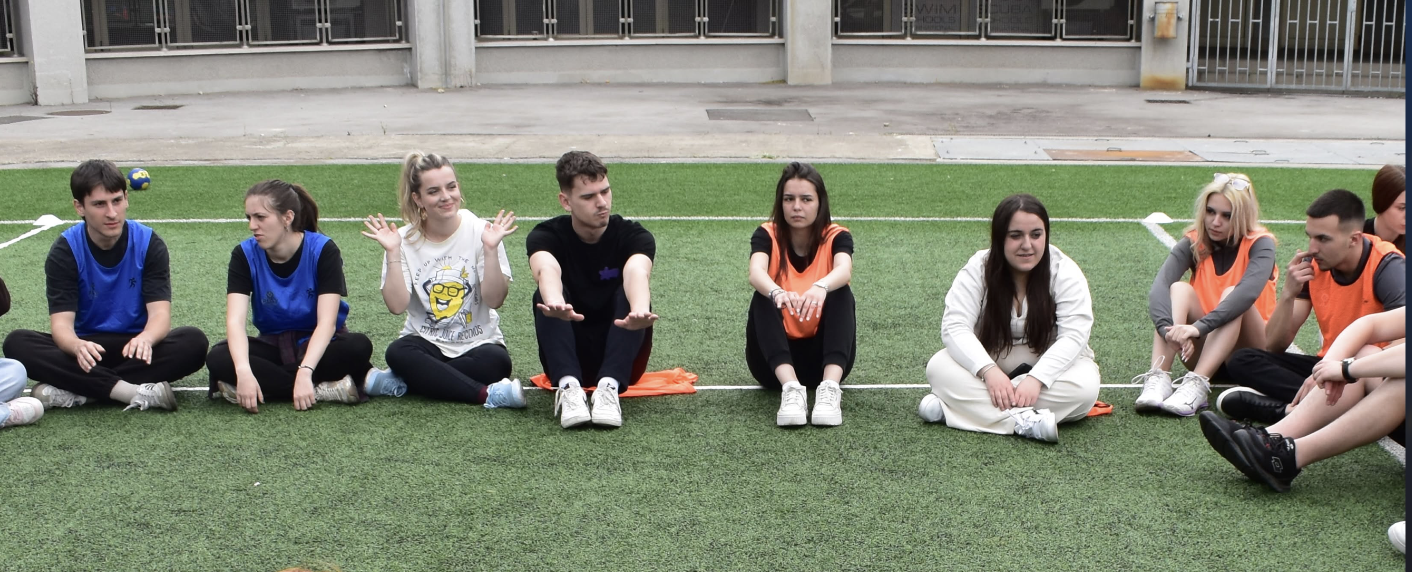
My own experience reflects this. One example is a youth activity I organised in cooperation with the Council of Europe Office in Mitrovica North, as a follow-up to the Block the Hatred 2.0 training I participated in. For me, this is an important part of what being a YEA means: taking the knowledge, values and connections gained through the network and translating them into initiatives that can have a tangible impact beyond the network itself.
As a young leader, my duty isn’t solely to push agendas forward, but to inspire the people around me to join me in building a better future. For years, young leaders have been reshaping the reality of all Western Balkan countries simply by shifting the standard - working on critical thinking, freedom of speech and expression, and civic awareness. In doing so, youth have set a new bar that countries must now rise to meet, weaving democratic values directly into the path toward accession.
That shift began for me a long time ago.
I was thirteen when I decided not to wait for a seat at the table. The Western Balkans never had the luxury of waiting for institutions to catch up - so young people became the institutions we needed, long before anyone gave us the title. Every project, every cross-border network politics couldn’t build, tells the same truth: we were never passive recipients of Europe’s future. We are its authors in the Western Balkans.
Mila Mihajlović is an award-winning book author, youth engagement expert and human rights activist